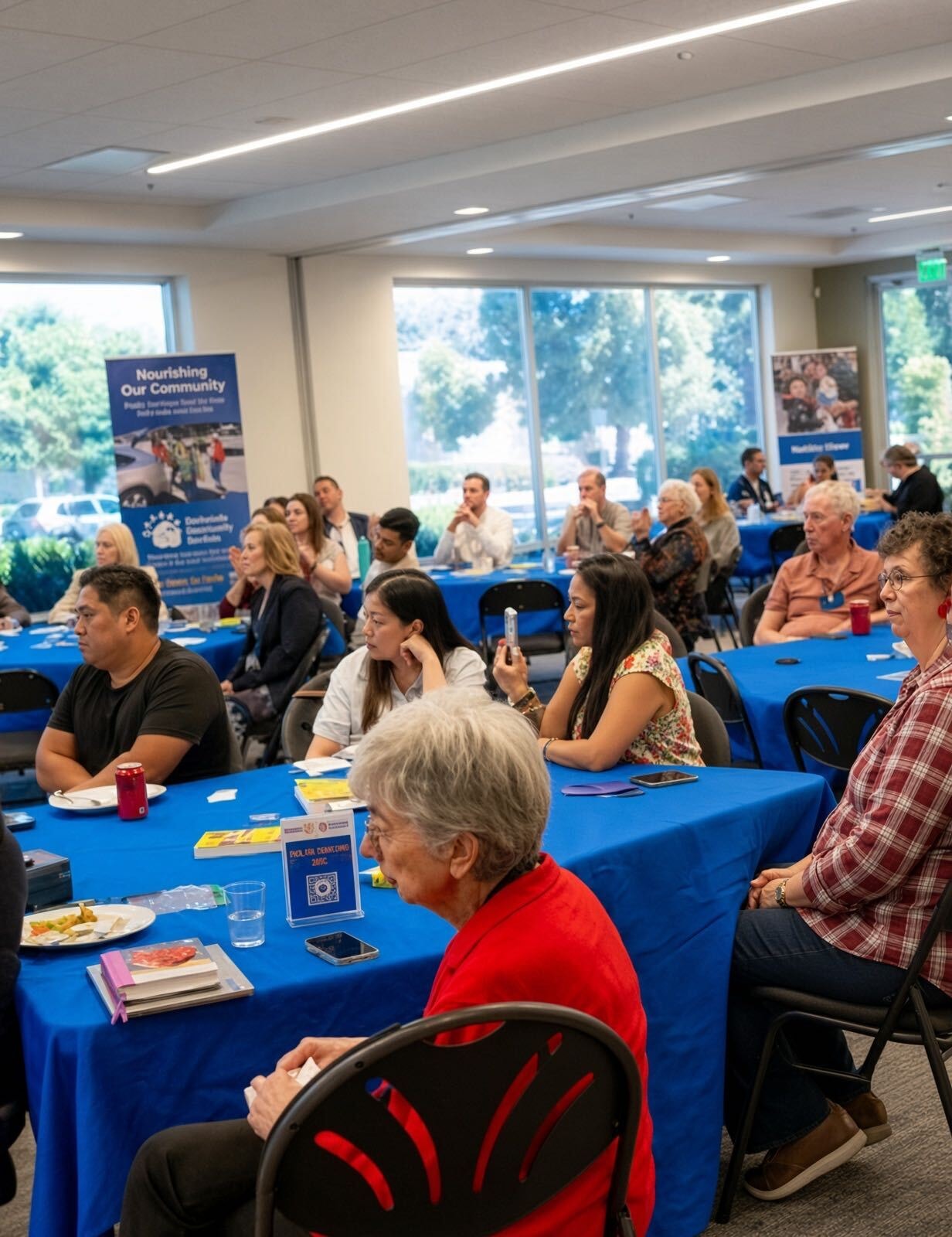

We all have a role to play in preventing child sex abuse. It means creating and promoting a culture of safety and accountability. By exposing the harm and lasting damage caused by child sex abuse, we are working to empower individuals, communities and institutions to recognize the signs, take action, prevent abuse and ensure prosecution of child sex crimes.
We believe in breaking silence and building safety! Here’s how you can help educate your community:
SPOT6 is a prevention education initiative dedicated to helping parents, educators, youth-serving organizations, and communities recognize and respond to the six stages of child grooming before abuse occurs.
Child grooming is a process used by offenders to gain access to, manipulate, and control children and the trusted adults around them. Because grooming follows recognizable patterns, it can be identified and interrupted before harm occurs.
Through presentations, workshops, educational resources, and community partnerships, SPOT6 equips adults with the knowledge and tools to recognize warning signs, have informed conversations, and take action to protect children.
Understanding how predators target vulnerable children, build trust, create isolation, and manipulate families is essential to preventing exploitation. Parents, caregivers, educators, coaches, youth leaders, and community members all play a critical role in protecting children.
By learning to recognize the stages of grooming and responding early, we can create safer environments where children can thrive.
SPOT6 provides prevention-focused education and resources that help communities:
Our educational programs are tailored for parents, educators, schools, youth-serving organizations, tweens, teens, and community groups.
Together, we can build awareness, strengthen prevention efforts, and protect children from exploitation and abuse.
Understanding how sexual predators isolate children and young adults and manipulate the adults responsible for them is essential for protecting children from harm which can last a lifetime. As parents, friends, teachers, youth leaders and neighbors, we can recognize the signs of vulnerability, isolation, grooming and manipulation. By intervening early, we can safeguard children from exploitation and make our communities safer.
The SPOT6 program is an essential educational tool for identifying the six stages of child grooming. Through education, resources, and advocacy, we are working to empower communities to recognize the warning signs of grooming and take action to protect children from exploitation and harm. Spot a stage and save a child!
We provide educational materials tailored for parents, educators, tweens, teens and students to help them recognize and protect against grooming behaviors.
In today’s digital era, safeguarding our children is paramount. Child grooming is a sinister process where perpetrators form relationships with children and their families in order to exploit them. They skillfully blend into the child’s life, gaining trust by posing as responsible and trustworthy figures.
Perpetrators start by observing the child, learning about their vulnerabilities, and subtly testing receptiveness. Through seemingly innocent interactions, they gather insight and lay the groundwork for trust. Once trust is established, they fulfill the child’s needs in a caring manner, reinforcing the bond and creating dependency.
They often deceive parents by appearing reliable and responsible, evading suspicion while gradually isolating the child from support systems.
Vigilance and education are crucial. Empowering children to recognize grooming attempts and fostering open communication in families and communities are vital steps. Advocating for policies that prioritize child safety and supporting survivors is equally essential.
In essence, by understanding grooming tactics and taking proactive measures, we can protect our children and create a safer future.
In the troubling world of sexual predators grooming children and teens, predators follow a sinister playbook with each stage designed to trap their victims. During Stage Three, the predator slyly spots and uses the child’s needs or desires to their advantage. They pretend to be the only one who gets the targeted victim, filling any need. They act like a friend to gain the child’s trust and making them feel special.
Every predator plays on the child’s kindness and desire for connection. By filling needs of any kind, the victim feels dependent on the predator. The predator acts like a buddy, but it’s all a disguise to keep control.
This stage is a slow, twisted game of manipulation where the predator pulls strings to keep the child and those who would otherwise be suspicious under their spell. Predators thrive on the vulnerability they’ve created, using it to get what they want.
Understanding these tactics is crucial to protecting our kids. By being aware of the signs, we can step in and stop harm before it’s too late. The Jan Broberg Foundation is doing vital work in this fight, helping raise awareness through education and supporting adult survivors in the Thrivivors online community.
Let’s come together to shield our children from the dangers of child sexual predator grooming, arming ourselves with knowledge and compassion. Learn about all six stages in our blog and sign up for newsletter updates.
How isolation works – Predators exploit the child’s natural human desire for love, attention, and validation, which gradually isolates them from their support network of safe people. They build false trust, portraying themselves as the best, or only, caring friend or mentor. This requires careful isolation of the child from family, friends, teachers and others whom the child trusts. The predator creates exclusive bonds with the child, making them feel special and valued. This bond blurs boundaries, making the child reliant on the predator for emotional fulfillment. At some point, the predator convinces the child that the others – parents, siblings, teachers – are not looking out for them as well as the predator does.
We need to be aware of adults who are seeking to spend “alone time” with a child, offering to take them on special trips or adventures, spending time behind closed doors in their home or the child’s home, or offering to “help out” with driving, caretaking or other activities that keep them with the child and separated from others.
At every stage of grooming, the abuser will insist that the victim feels responsible for keeping secrets about the relationship from everyone else.
A critical stage in this process is introducing nudity and sexual touch, which involves a tactic known as “barrier testing and erosion.” Barrier testing refers to the abuser’s attempt to identify the child’s boundaries concerning touch, talk, or behavior, and to determine whether those boundaries are negotiable. The abuser systematically probes these boundaries through behaviors such as sexual comments, jokes, playful touches, or suggestive interactions—often starting in innocent or seemingly harmless ways and gradually escalating to more explicit content. For children of different ages, this process varies; for older children and teens, it may involve sexual discussions via social media, requesting explicit images, or manipulating the victim into sexual talk.
For younger children, grooming often involves playful physical contact like tickling, wrestling, or nudity during routine activities, with the end goal of eroding boundaries to facilitate damaging sexual interaction. Abusers exploit children’s curiosity about sexuality and their natural reactions to flirtatious or playful behavior, employing tactics that seem benign in the moment but serve to gradually break down their barriers, paving the way for abuse.
Abuse starts with carefully pushing past the child’s own boundaries and gradually introducing intimate activities like touching, and exposing the child to images and words that are increasingly more sexual. When it comes to online grooming, the groomer may start off sharing inappropriate images like a topless picture and progress to images and videos displaying extremely inappropriate sexual content.
Touching can start as affectionate hugs, hand-holding and kissing, leading to playful wrestling and tickling. Gradually, as the child is less self-protective, the predator will progress to touching the private parts and initiating fully sexual behaviors. The predator will overcome any fear or rejecting behavior from the child by convincing them that their reaction are “natural” and that they “need to get over it.”
At every stage of grooming, the abuser will insist that the victim feels responsible for keeping secrets about the relationship from everyone else.
Keeping the victim silent is a crucial aspect of the abuser’s strategy, and we have included it as a sign of grooming in every stage of the process. Abusers are highly skilled at maintaining secrecy, employing various tactics such as threats, guilt, and shame to silence their victims.
Many children who have been sexually abused will internalize these feelings of responsibility, believing that they are somehow to blame for what happened or that they caused the abuse through their flaws—thoughts that are completely false but common among survivors. Abusers exploit these feelings and reinforce them by using threats, and lies, such as “no one will believe you,” creating and reinforcing a powerful barrier to disclosure. Sadly, children are frequently not believed when they disclose abuse, partly due to societal misconceptions and the fact that abusers often appear trustworthy and helpful, In fact, the CDC reports that 98% of children’s reports are factual even when the child later recants. The key takeaway is that adults must be prepared to believe children when they disclose abuse. Understanding the grooming process, including tactics to silence victims, is essential for preventing child sexual abuse and providing appropriate support to those who have been victimized.
Once the physical or emotional abuse begins, the offender keeps everything in control by threatening the child and putting the responsibility for the situation on them, convincing the child that they were the seducer, the predator couldn’t help it.
The abuser will work to convince the child that nobody would ever believe them if they tell about the abuse, to ensure silence. The abuser will often threaten to hurt the child’s family if they don’t obey, keep silent and stay passive.
Abuse can be of short duration or can last for years, sometimes extending to actual trafficking in which the child’s sexual “services” are passed on or sold to others. This stage is the most frequently prosecuted as it involves more specifically criminal behavior on the predator’s part. However, it’s important to remember that harm to the child begins at the very onset of the process, with the destruction of the child’s trust and ability to feel safe.
Teresa Agustin is survivor of online child grooming and long-term abuse. At 16, she dreamed of becoming a professional radio DJ and connected with a 24-year-old male radio DJ who posed as a mentor, luring her into a manipulative and secret toxic abusive relationship that lasted nearly a decade.
In spite of enduring extensive trauma, Teresa graduated high school, earned her college degree from San Francisco State University, and worked as a professional radio and club DJ in the SF Bay Area and Central Coast of California.
After discovering the true identity of her abuser, who was married and had children, she ended the traumatic connection and buried details of her abuse deep down inside. The consequences of the abuse manifested in different ways from an eating disorder, emotional outbursts, depression, to suicidal thoughts.
Seeking mental health help, she began working with a trusted trauma therapist. In a therapy session, she opened up about the details of her underage abuse and the 10 year relationship of lies and manipulation. She had never heard the term “grooming” until that moment. At the age of 40, she was completely unfamiliar with the term and had to Google it.
That online search helped her realize that what she had experienced as a teenager and young adult was actually criminal abuse. With that understanding and the support of her husband, she filed police reports with the local and federal law enforcement. After months of investigation, the authorities confronted her abuser and her abuser confirmed all of Teresa’s allegations. Unfortunately, the current CA law states that child sexual abuse had to be reported before the alleged victim reaches the age of 40, and she started her report a couple months past her 40th birthday. Due to the California statute of limitations even with the newly emerged evidence, justice was denied to Teresa.
Refusing to let her story end in silence, Teresa launched the SPOT6 Education Program, a prevention-based curriculum that teaches youth and parents to recognize the six stages of child grooming. Her mission: to “break silence and build safety” through early education and community awareness. In 2024, Teresa partnered with the Jan Broberg Foundation, integrating SPOT6 into its education pillar, with the goal of empowering victims and survivors to speak out. In 2025, she was appointed Chairperson of the Board of Directors, amplifying her leadership in the fight to prevent child sexual abuse.
Teresa was born and raised in the Silicon Valley Bay Area, where she continues to serve her community. She holds a Bachelor’s degree in Business Administration in Marketing. In 2013, she became a real estate professional, building her family’s property management firm, which is dedicated to providing permanent housing to low-income families, families in transition, single mothers escaping domestic violence, and former foster care young adults. She is an active supporter of local housing organizations such as Sunnyvale Community Services, Abode Services and Santa Clara County Housing Authority.


If you have any questions or would like to collaborate on a project, feel free to contact me via email or social media. I am always open to new opportunities and collaborations
@spot6org - instagram
We believe in the power of community and the importance of working together to achieve our goals.
At SPOT6, we empower individuals and communities to create lasting change.
Book a presentation from SPOT6. Email Teresa Agustin at teresa@janbrobergfoundation.org

Help us make a difference in the lives of others by making a donation to SPOT6. Every contribution counts! SPOT6 is in partnership with the Jan Broberg Foundation. Learn more: janbrobergfoundation.org
Headquarters: San Francisco, CA Representatives located in Santa Clara, UT
We use cookies to analyze website traffic and optimize your website experience. By accepting our use of cookies, your data will be aggregated with all other user data.